<?xml version="1.0" encoding="utf-8"?><feed xmlns="http://www.w3.org/2005/Atom" ><generator uri="https://jekyllrb.com/" version="3.10.0">Jekyll</generator><link href="https://matthewdhull.github.io/feed.xml" rel="self" type="application/atom+xml" /><link href="https://matthewdhull.github.io/" rel="alternate" type="text/html" /><updated>2026-07-04T14:14:39-07:00</updated><id>https://matthewdhull.github.io/feed.xml</id><title type="html">Matthew Hull</title><subtitle>Matthew Hull — Machine Learning PhD student at Georgia Tech researching adversarial machine learning and differentiable rendering.</subtitle><author><name>Matthew Hull</name></author><entry><title type="html">Seamless Writing with the LaTeX Quartet: Overleaf, Github, Zotero, and VSCode</title><link href="https://matthewdhull.github.io/posts/2024/05/post-6/" rel="alternate" type="text/html" title="Seamless Writing with the LaTeX Quartet: Overleaf, Github, Zotero, and VSCode" /><published>2024-05-17T00:00:00-07:00</published><updated>2024-05-17T00:00:00-07:00</updated><id>https://matthewdhull.github.io/posts/2024/05/post-6</id><content type="html" xml:base="https://matthewdhull.github.io/posts/2024/05/post-6/"><![CDATA[<p>I wrote a <a href="https://medium.com/polo-club-of-data-science/seamless-writing-with-the-latex-quartet-overleaf-github-zotero-and-vscode-66a91a5993ec">post on Medium </a> about using writing LaTeX and using a best of all words approach with some useful tools.</p>

<p><img src="/images/latex_quartet.png" alt="LaTeX Quartet" /></p>]]></content><author><name>Matthew Hull</name></author><category term="LaTeX" /><summary type="html"><![CDATA[A best of all worlds approach to writing with LaTeX using Overleaf, GitHub, Zotero, and VSCode]]></summary></entry><entry><title type="html">Visual Studio Code SSH Server</title><link href="https://matthewdhull.github.io/posts/2022/10/post-5/" rel="alternate" type="text/html" title="Visual Studio Code SSH Server" /><published>2022-10-31T00:00:00-07:00</published><updated>2022-10-31T00:00:00-07:00</updated><id>https://matthewdhull.github.io/posts/2022/10/post-5</id><content type="html" xml:base="https://matthewdhull.github.io/posts/2022/10/post-5/"><![CDATA[<p>I almost exclusively develop using SSH sessions on other CUDA-enabled machine for differentiable rendering, PyTorch, training models, etc.  Recently, I ran into the problem off having the VS Code server failing to start at the beginning of an ssh session.  This <a href="https://stackoverflow.com/questions/67976875/vs-code-remote-ssh-the-vscode-server-failed-to-start-ssh">post on SO </a> showed how to kill the server remotely so that it will restart on the next login attempt.</p>]]></content><author><name>Matthew Hull</name></author><category term="Visual Studio Code" /><summary type="html"><![CDATA[How to restart the VS Code server on a remote machine]]></summary></entry><entry><title type="html">3D Model Resources</title><link href="https://matthewdhull.github.io/posts/2022/09/post-2/" rel="alternate" type="text/html" title="3D Model Resources" /><published>2022-09-13T00:00:00-07:00</published><updated>2022-09-13T00:00:00-07:00</updated><id>https://matthewdhull.github.io/posts/2022/09/post-2</id><content type="html" xml:base="https://matthewdhull.github.io/posts/2022/09/post-2/"><![CDATA[<h3 id="resources-for-3d-models">Resources for 3D Models</h3>

<p><a href="https://www.turbosquid.com">TurboSquid</a></p>

<p><a href="https://free3d.com">Free3D</a></p>

<p><a href="https://www.renderhub.com/">RenderHub</a></p>

<p><a href="https://www.blendswap.com/">BlendSwap</a></p>

<p><a href="https://shapenet.org">ShapeNet</a></p>

<p><a href="https://benedikt-bitterli.me/resources/">Benedikt Bitterli</a></p>]]></content><author><name>Matthew Hull</name></author><category term="Rendering" /><category term="3D" /><summary type="html"><![CDATA[A list of resources for free and paid 3D models]]></summary></entry><entry><title type="html">Cameras Along Spline</title><link href="https://matthewdhull.github.io/posts/2022/09/post-3/" rel="alternate" type="text/html" title="Cameras Along Spline" /><published>2022-09-13T00:00:00-07:00</published><updated>2022-09-13T00:00:00-07:00</updated><id>https://matthewdhull.github.io/posts/2022/09/post-3</id><content type="html" xml:base="https://matthewdhull.github.io/posts/2022/09/post-3/"><![CDATA[<p>A <a href="https://www.graphicsandprogramming.net/eng/tutorial/blender/the-rendering/blender-duplicate-camera-along-curve">method</a> to set up an array of cameras along a set of prescribed intervals or vertices.</p>

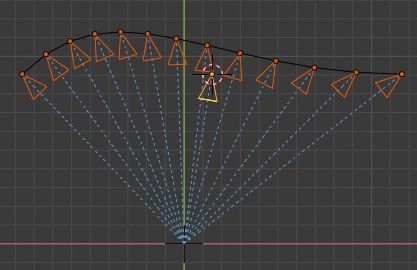
<p><img src="/images/blender_cameras_along_spline.jpg" alt="Cameras" /></p>]]></content><author><name>Matthew Hull</name></author><category term="Blender" /><category term="Rendering" /><category term="3D" /><summary type="html"><![CDATA[Ways to generate cameras along a set of prescribed intervals or vertices]]></summary></entry><entry><title type="html">MeshLab and PyMeshLab</title><link href="https://matthewdhull.github.io/posts/2022/09/post-4/" rel="alternate" type="text/html" title="MeshLab and PyMeshLab" /><published>2022-09-13T00:00:00-07:00</published><updated>2022-09-13T00:00:00-07:00</updated><id>https://matthewdhull.github.io/posts/2022/09/post-4</id><content type="html" xml:base="https://matthewdhull.github.io/posts/2022/09/post-4/"><![CDATA[<p><a href="https://www.meshlab.net">MeshLab</a> is an open source system for processing and editing 3D triangular meshes. It provides a set of tools for editing, cleaning, healing, inspecting, rendering, texturing and converting meshes. It offers features for processing raw data produced by 3D digitization tools/devices and for preparing models for 3D printing.</p>

<p>Includes UI and API for mesh editing.</p>

<p><a href="https://github.com/cnr-isti-vclab/PyMeshLab">GitHub</a> for PyMeshLab</p>

<p><a href="https://github.com/cnr-isti-vclab/meshlab">GitHub</a> for MeshLab</p>

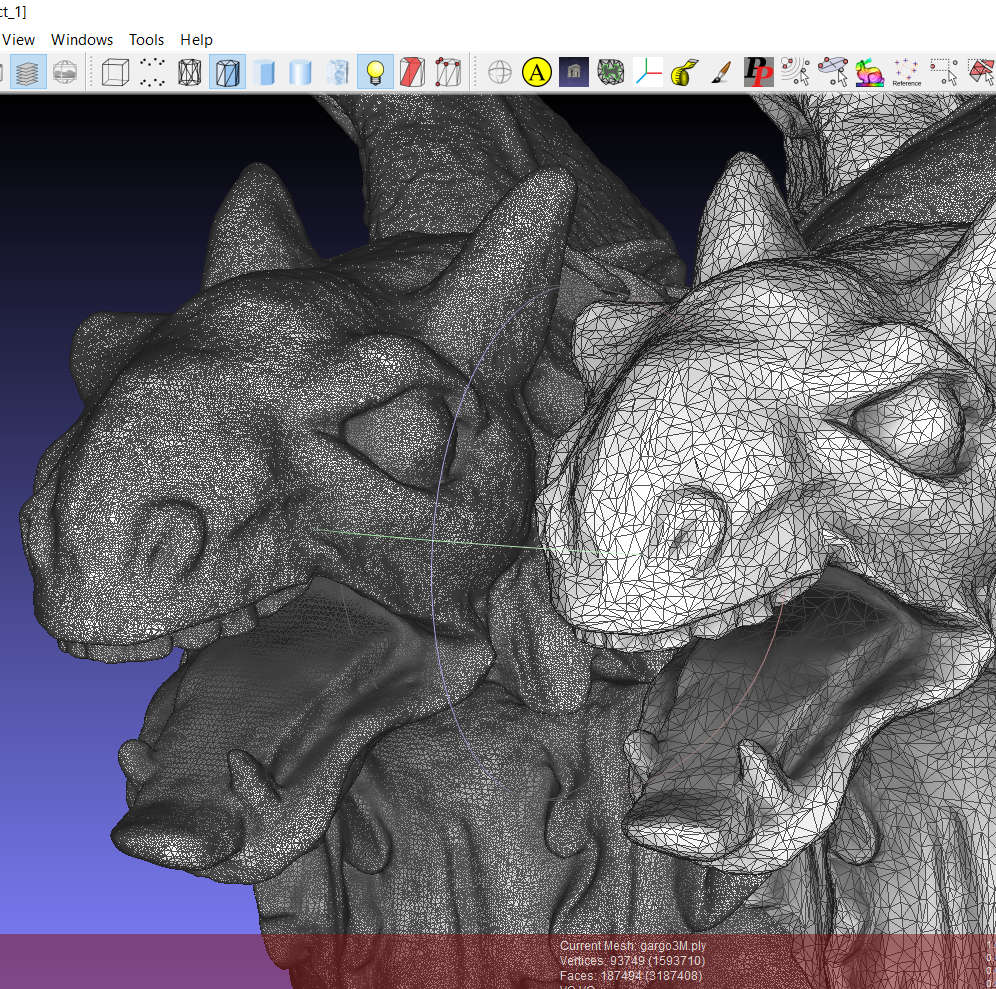
<p><img src="/images/mesh_lab_simplification.jpg" alt="Simplification" /></p>

<p>Offered under GNU License.</p>]]></content><author><name>Matthew Hull</name></author><category term="Rendering" /><category term="3D" /><summary type="html"><![CDATA[Tools for processing and editing 3D triangular meshes]]></summary></entry><entry><title type="html">Cardioid</title><link href="https://matthewdhull.github.io/posts/2021/01/post-1/" rel="alternate" type="text/html" title="Cardioid" /><published>2021-01-01T00:00:00-08:00</published><updated>2021-01-01T00:00:00-08:00</updated><id>https://matthewdhull.github.io/posts/2021/01/post-1</id><content type="html" xml:base="https://matthewdhull.github.io/posts/2021/01/post-1/"><![CDATA[<p>Cardioid Trace</p>

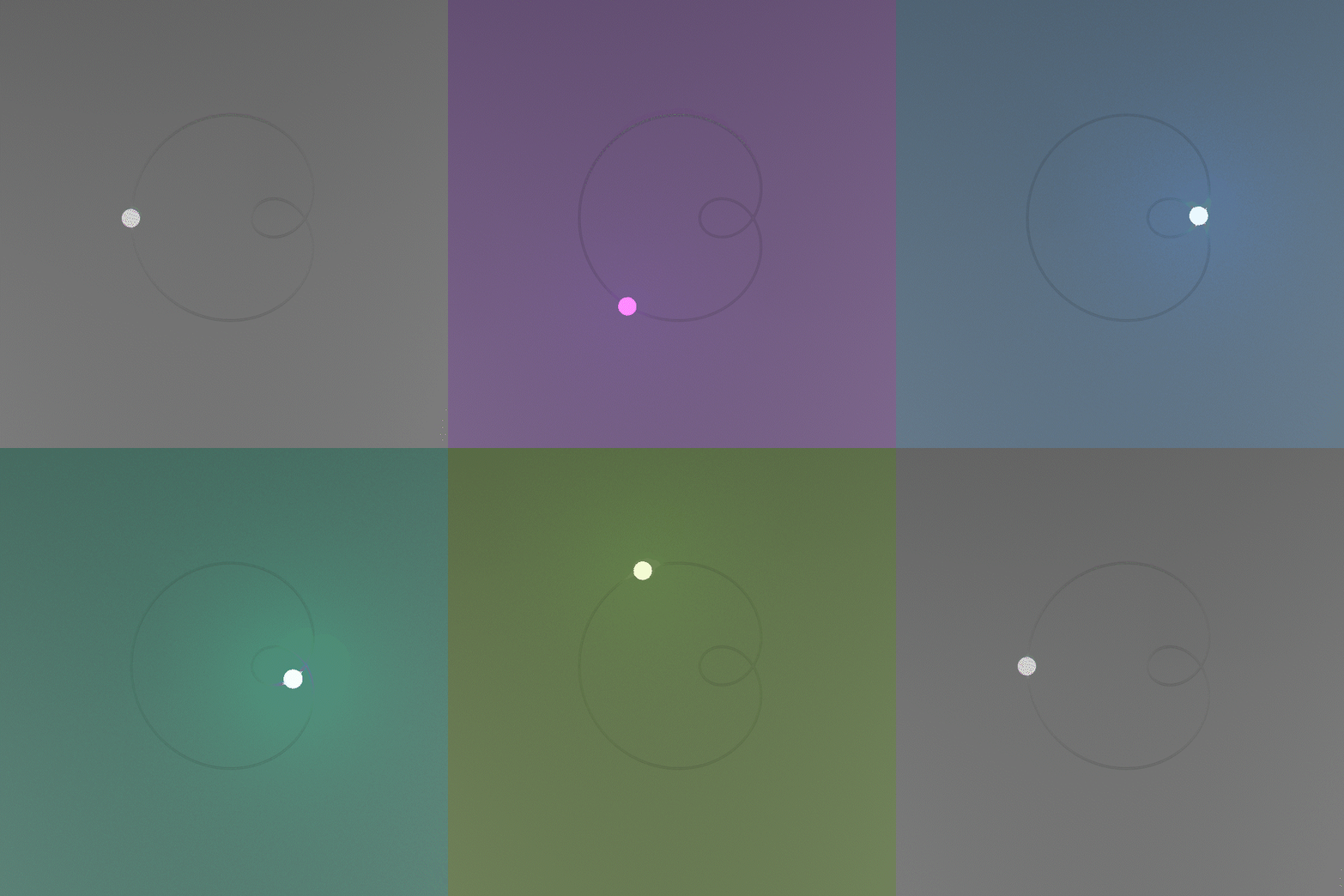
<p><img src="/images/cardioid_trace.gif" alt="Cardioid" /></p>]]></content><author><name>Matthew Hull</name></author><category term="Cinema4D" /><category term="Rendering" /><category term="3D" /><category term="Mathematics" /><summary type="html"><![CDATA[A parametric cardioid curve rendered in Cinema4D]]></summary></entry></feed>